Sustainability in every step there's green in every can
Our processing line is organised around two things: consistent product quality, and getting as much material back into use as possible. Here is how we turn leftover cans into architectural coatings:
1. High-Volume Intake & Initial Sorting
Paint boxes and large crates arrive at our processing line from county Household Hazardous Waste (HHW) programs, regional retail takeback store networks, and contracting businesses. Our operators physically handle every single container to visually verify that it contains liquid latex paint.
Oil-based paints and any other non-latex material are sorted out of the latex line at this stage to protect the purity of our processing stream.
2. Manual Quality Inspection & Grouping
Approved cans move down our roller tables, where an operator uses a specialized tool to pop the lids open. The operator scoops through the contents of every container to evaluate its physical health.
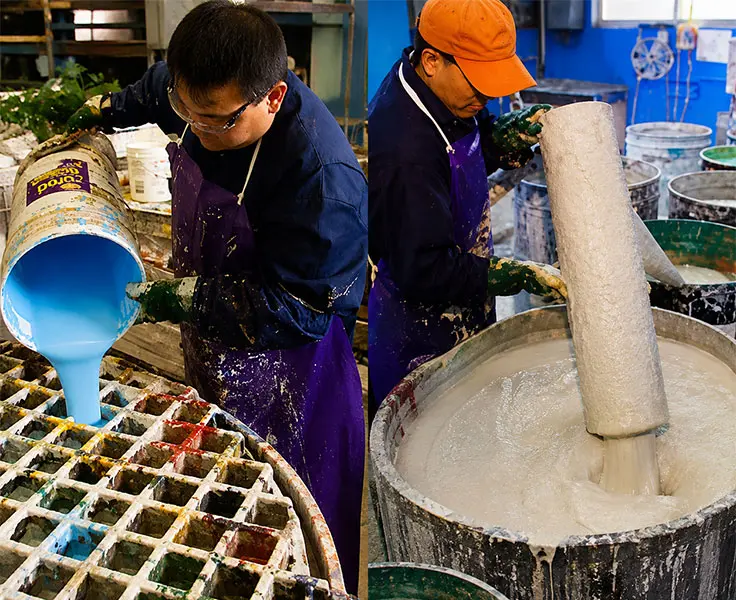
If the paint is hard, runny, or sour-smelling, it is diverted into solid waste drums for alternative industrial recycling. If the paint is healthy and fresh, it is dumped directly into a designated 55-gallon feedstock drum based on its specific color family (yellow, red, green, blue, white, etc.).
3. High-Speed Color Blending
Once a color family feedstock drum is filled, it is sealed, labeled, and logged into our inventory. When our production team prepares to manufacture a fresh run of paint, they pull the precise color drums needed to blend the final product.
Reusable paints of the same color are pumped into an industrial blending tank and thoroughly mixed using a high-speed mechanical mixer to create a completely uniform, consistent batch.
4. Rigorous Testing & Additive Adjustment
We never guess when it comes to product durability. Every combined batch undergoes rigid testing protocols by our production team. We check each tank for precise specifications regarding viscosity, sheen, coverage, pH, gloss, and color variance.
The paint is then carefully adjusted with additives as necessary to ensure it meets or exceeds the strict performance standards of national, name-brand virgin paints.
5. Triple Filtration & Finished Packaging
After a batch clears its quality control hurdles, the liquid paint is run through a strict triple-filtration system to eliminate any remaining fine particles or imperfections.
The smooth, high-solid latex paint is packaged into clean, brand-new cans and 5-gallon pails, labeled as Amazon Select recycled-content paint, and stacked onto pallets ready for immediate distribution.